How to Explain Employment Gaps on Your Resume
Gaps in your work history don't have to sink your application. Here's how to address them honestly and confidently.
You have a gap in your employment history, and you’re worried it’ll cost you the job.
Employers are more understanding than you think. The key is addressing gaps honestly, briefly, and confidently.
The Basic Strategy
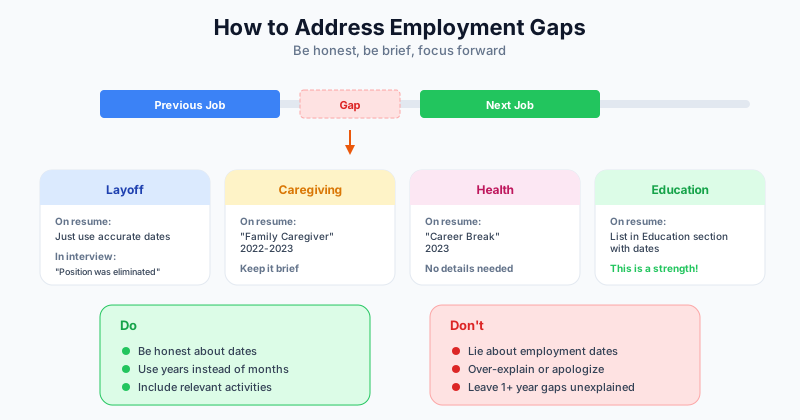
Be honest. Don’t lie or try to hide gaps with fake dates. Background checks exist.
Be brief. One line of explanation is enough. Don’t over-explain or apologize.
Focus forward. Emphasize what you learned, what you did, and why you’re ready now.
How to Address Common Gaps
Layoff or Job Loss
You don’t need to explain this on your resume. Just show accurate dates. If asked in an interview:
“The company went through restructuring and my position was eliminated. I used the time to [upskill/consult/focus on my job search].”
Family or Caregiving
“Family Caregiver, 2022-2023”
Or simply leave the gap and address it if asked.
Health Issues
You’re not required to disclose health information.
“Career break for personal reasons, 2022-2023”
Going Back to School
List your education with dates:
“MBA, University of Toronto, 2022-2024”
Travel or Sabbatical
“Career sabbatical: Traveled to 15 countries while completing online certifications in digital marketing, 2023”
Frame it around growth, not vacation.
Resume Formatting Tips
Use years instead of months. “2021-2023” draws less attention than “March 2021-June 2023.”
Include relevant activities. Freelance work, volunteering, certifications, or coursework shows you stayed active.
Consider a hybrid format. If your gap is significant, leading with skills and achievements can shift focus away from chronology.
What Not to Do
Don’t lie about dates. Extending job dates to cover gaps will surface in background checks.
Don’t over-explain. A paragraph justifying your gap draws more attention to it.
Don’t apologize. Confidence matters. Present your history matter-of-factly.
Don’t leave unexplained gaps longer than a year. Add a brief note for significant gaps so employers aren’t left guessing.
In the Interview
If asked about your gap:
- Acknowledge it briefly. One or two sentences max.
- Explain what you did. Even “I focused on family” or “I dealt with a health issue that’s now resolved” is fine.
- Pivot to the present. “I’m excited to get back to work and bring [skill/experience] to this role.”
Sample Gap Explanations
| Reason | Resume Line |
|---|---|
| Layoff | (No line needed, just accurate dates) |
| Caregiving | “Family Caregiver, 2022-2023” |
| Health | “Career Break, 2023” |
| Education | List degree with dates |
| Travel | “Sabbatical: Independent travel and professional development, 2023” |
| Freelance | List freelance work as a position |
The Bottom Line
Gaps don’t disqualify you. Dishonesty does. Be truthful, be brief, and focus on why you’re the right person for the job today.