Laid Off? Your 30-Day Job Search Action Plan
Just lost your job? Take a breath. This step-by-step action plan walks you through exactly what to do in your first 30 days, from handling severance to landing interviews.
You just got the news. Maybe it was a surprise. Maybe you saw it coming. Either way, you’re sitting there feeling shocked, anxious, maybe a little sick to your stomach.
Here’s what I want you to know first: this is not your fault, and you are going to be okay.
Layoffs happen to incredibly talented people all the time. The economy shifts, companies restructure, priorities change. It says nothing about your value or your future. What matters now is what you do next.
The worst part about getting laid off isn’t just losing your income. It’s the paralysis. You don’t know where to start, so you either do nothing or you panic-apply to 100 jobs without a strategy.
Neither approach works.
What you need right now is a plan. A clear, day-by-day roadmap that tells you exactly what to do, in what order, so you can move from “What just happened?” to “I’ve got this” as quickly as possible.
That’s what this guide is. Consider it your 30-day action plan for bouncing back faster and stronger.
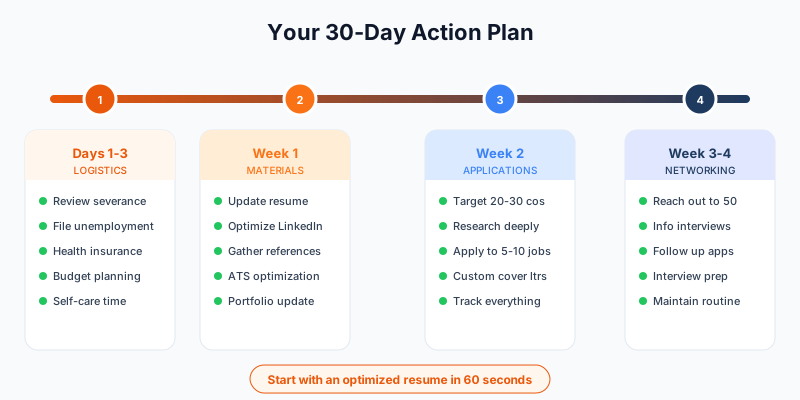
Quick Reference: Your 30-Day Timeline
| Timeline | Focus | Key Actions |
|---|---|---|
| Days 1-3 | Logistics | Handle severance, benefits, unemployment filing, budget |
| Week 1 | Marketing Materials | Update resume, optimize LinkedIn, gather references |
| Week 2 | Strategic Applications | Build target list, apply to 5-10 quality roles |
| Week 3 | Networking | Reach out to contacts, set up informational interviews |
| Week 4 | Momentum | Follow up, prep for interviews, maintain self-care |
Day 1-3: Breathe and Handle the Logistics
First, Take Care of Yourself
I know you want to jump straight into job applications. Don’t. Not yet.
Give yourself 24-48 hours to process what happened. Talk to your partner, call a friend, go for a walk. Acknowledge that this sucks and it’s okay to feel upset, scared, or angry.
Here’s why this matters: you’re about to spend the next month (or longer) selling yourself to employers. You can’t do that effectively while you’re still in shock. Take a breath. Get your head straight. Then we move.
Day 1: Understand Your Severance and Benefits
Before you do anything else, you need to know exactly what you’re working with financially. This determines how much runway you have.
Action items for Day 1:
Review your severance package carefully. How many weeks or months of pay are you getting? When will you receive it? Are there any strings attached (non-compete, non-disparagement clauses)?
Negotiate if possible. Many people don’t realize severance is often negotiable, especially if you’ve been with the company for a while. You can ask for additional weeks of pay, extended health benefits, outplacement services, a neutral reference letter, or removal of restrictive clauses. The worst they can say is no. The best they can say is yes, which could mean thousands of extra dollars.
Understand your health insurance options. If you’re in the US, you’ll likely get a COBRA notification. COBRA lets you keep your employer health insurance, but you pay the full premium (which is expensive). Alternatives include:
- Your partner’s insurance (qualifying event allows enrollment)
- Healthcare.gov marketplace (you may qualify for subsidies)
- Short-term health insurance plans
File for unemployment benefits immediately. Don’t wait. Even if you got severance, you may still qualify. The application process takes time, and benefits are usually backdated only to your filing date, not your layoff date. Apply online through your state’s unemployment website.
Check your 401(k) and stock options. Understand your vesting schedule and decide whether to roll over your 401(k) to an IRA or a new employer’s plan later.
Day 2-3: Get Your Finances in Order
Now that you know what’s coming in, figure out what’s going out.
Action items for Days 2-3:
Calculate your monthly expenses. Pull up your bank statements and add up rent/mortgage, utilities, groceries, car payments, insurance, subscriptions, everything. This is your baseline survival number.
Build a bare-bones budget. What can you cut temporarily? Pause subscriptions you don’t need. Switch to a cheaper phone plan. Skip eating out. Every dollar you save extends your runway.
Figure out your financial runway. Severance + savings + unemployment benefits = how many months can you live? Write this number down. It’s not meant to scare you. It’s meant to give you clarity and urgency.
Make a debt plan if needed. If you have credit card debt or student loans, call your lenders. Many offer hardship programs that can temporarily reduce or pause payments.
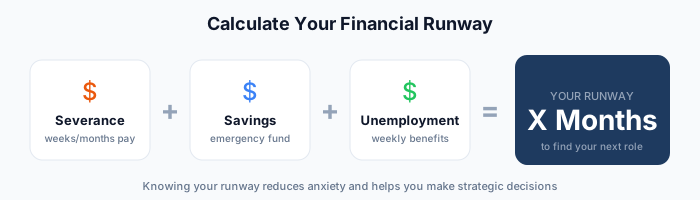
Why we do this first: You can’t think clearly when you’re terrified about money. Once you know exactly where you stand financially, the anxiety drops. You have a timeline. You have control.
Week 1: Update Your Marketing Materials
Now we get to work. This week is all about making sure you’re ready to compete.
Day 4-5: Overhaul Your Resume
Your resume is probably outdated. Even if you updated it six months ago, it’s not optimized for today’s job market.
Here’s the hard truth: 70% of resumes are filtered out by Applicant Tracking Systems (ATS) before a human ever sees them. If your resume isn’t formatted correctly and doesn’t match the job description keywords, it goes straight to the black hole.
Action items for Days 4-5:
Audit your current resume. Is it formatted in a way that ATS can read? (No tables, headers/footers, or weird fonts.) Are your accomplishments quantified with numbers? Does it show impact, not just responsibilities?
Rewrite your bullet points using the STAR method:
| Component | Question to Answer |
|---|---|
| Situation | What was the challenge? |
| Task | What did you need to do? |
| Action | What did you actually do? |
| Result | What was the measurable outcome? |
| Instead of Writing… | Write This |
|---|---|
| “Responsible for managing social media accounts.” | “Increased social media engagement by 340% in 6 months by implementing a data-driven content calendar and A/B testing post formats.” |
Tailor your resume to your target roles. Generic resumes don’t work anymore. You need to customize your resume for each type of position you’re applying to. This doesn’t mean rewriting everything, it means adjusting keywords, reordering sections, and emphasizing the most relevant experience.
Use ReviseCV to speed this up. Instead of spending 30-60 minutes manually tailoring your resume for each job, you can optimize it in under 2 minutes. Upload your resume, paste the job description, and get an ATS-friendly, tailored version instantly.
Time-Saver: When every day counts, ReviseCV’s Resume Tailor saves you 30+ minutes per application. Get your resume tailored to any job posting in about 2 minutes, not 60 minutes.
- Start with an ATS-friendly template. If your current resume format needs a complete overhaul, don’t waste time fighting with formatting. Pick from 20+ professional templates that are already optimized for ATS systems.
Day 6-7: Optimize Your LinkedIn Profile
Your LinkedIn profile is your digital storefront. Recruiters are looking at it, guaranteed.
Action items for Days 6-7:
Update your headline. Don’t just put your old job title. Use your headline to say what you do and who you help. Example: “Product Marketing Manager | Helping SaaS Companies Scale Through Data-Driven Campaigns”
Rewrite your About section. This should read like a story, not a resume. Who are you? What do you do best? What are you looking for? Make it conversational and human.
Add accomplishments to your Experience section. Use the same quantified, results-driven bullet points from your resume.
Turn on “Open to Work” (strategically). You can set this to be visible only to recruiters, not your entire network, if you’re worried about optics.
Get a professional-looking profile photo. You don’t need a photographer. Just a clean, well-lit photo where you look approachable and professional.
Day 7: Gather Your References
You’re going to need references soon. Line them up now, before you’re scrambling.
Action items for Day 7:
Choose 3-5 people who can speak to your work. Former managers are best, but colleagues and clients work too.
Ask permission first. Send a short email: “Hi [Name], I was recently laid off and I’m starting my job search. Would you be comfortable serving as a reference for me? I’m targeting [type of role] positions.”
Prep them with context. Once they agree, send them a quick summary of the roles you’re applying to and a few key accomplishments they can mention if asked.
Thank them. And keep them updated as you progress.
By end of Week 1, you should have:
- ATS-optimized resume with quantified achievements
- Updated LinkedIn profile with “Open to Work” enabled
- 3-5 references confirmed and prepped
Week 2: Target Companies and Start Applying (Strategically)
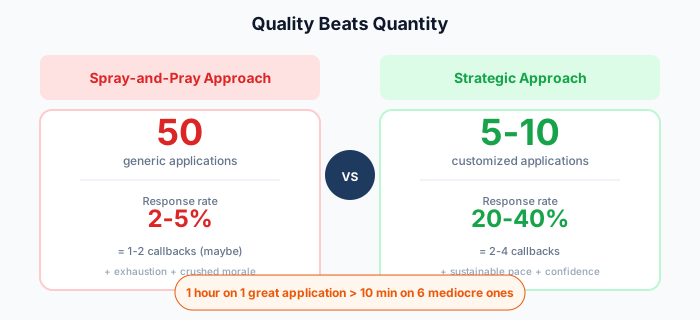
This is where most people go wrong. They blast out 50 applications to random jobs and wonder why they hear nothing back.
Quality beats quantity, every single time.
Day 8-10: Build Your Target Company List
Action items for Days 8-10:
Identify 20-30 companies you actually want to work for. Not just any company that’s hiring. Companies where you’d genuinely be excited to work. Consider:
- Industry (do you want to stay in your current industry or pivot?)
- Company size (startup, mid-size, enterprise?)
- Culture (what kind of environment do you thrive in?)
- Growth stage (are they scaling, stable, or restructuring?)
Research each company deeply. Read their About page, recent news, LinkedIn posts, Glassdoor reviews. Understand their challenges and priorities. This will help you tailor your application and nail the interview later.
Find the decision-makers. Use LinkedIn to identify who would be your hiring manager. Follow them. Engage with their posts occasionally (more on this in Week 3).
Day 11-14: Apply to 5-10 Roles (Quality Applications)
Notice I said 5-10, not 50. Here’s why:
Key Stat: A customized application has a 40% higher response rate than a generic one. You’re better off spending an hour on one great application than 10 minutes on six mediocre ones.
Action items for Days 11-14:
Choose roles that are a strong match. You should meet at least 70% of the “required” qualifications. Don’t waste time on jobs where you’re clearly underqualified.
Customize your resume for each application. Use the job description keywords. Reorder bullet points to highlight the most relevant experience first. (ReviseCV makes this painless)
Write a targeted cover letter. Not a generic template. A short, punchy letter that shows you understand the company’s challenges and explains exactly how you can help. Three paragraphs max:
- Why you’re excited about this specific company and role
- Your most relevant accomplishment (with numbers)
- A clear call to action (“I’d love to discuss how I can help [Company] achieve [specific goal]. Are you available for a brief call next week?“)
Pro Tip: Need both a tailored resume and cover letter fast? The Application Kit generates both in one go. Perfect when you’re applying to multiple quality roles.
Apply directly on the company website when possible. LinkedIn Easy Apply is convenient, but applications submitted directly often get more attention.
Track everything in a spreadsheet. Company name, role, date applied, contact person, status, follow-up date. You’ll thank yourself later.
By end of Week 2, you should have:
- Target list of 20-30 companies
- 5-10 quality applications submitted
- Application tracker spreadsheet started
Week 3: Network Like Your Job Depends on It (Because It Does)
The Reality: 70-85% of jobs are filled through networking, not job boards. If you’re only applying online, you’re missing most opportunities.
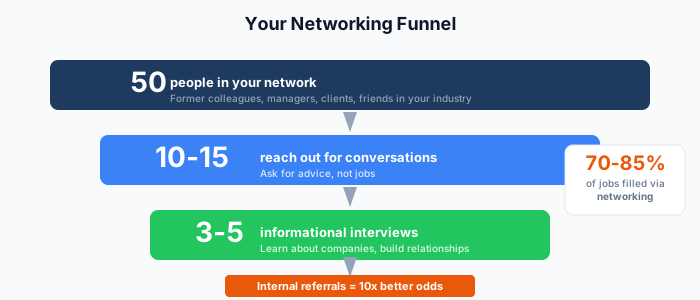
Most people hate networking because they think it means awkwardly asking strangers for jobs. It doesn’t. Networking is just building relationships with people who might be able to help you, now or later.
Day 15-17: Reach Out to Your Existing Network
Start with the people who already know and like you.
Action items for Days 15-17:
Make a list of 50 people in your network. Former colleagues, managers, clients, college friends, people you met at conferences, anyone in your industry.
Send personalized messages to 10-15 people. Not a mass email. Individual, genuine notes.
Template: “Hi [Name], hope you’re doing well. I wanted to let you know I was recently laid off from [Company] and I’m exploring [type of role] opportunities. I’ve always admired the work you’re doing at [Their Company]. Would you be open to a quick coffee chat (virtual or in-person)? I’d love to hear about what you’re working on and get your advice on my search.”
Ask for advice, not jobs. People are way more likely to help when you’re asking for insights, not handouts. If they know of an opening, they’ll tell you anyway.
Day 18-21: Set Up Informational Interviews
Informational interviews are gold. They help you learn about companies, get insider info on roles, and build relationships with people who might refer you later.
Action items for Days 18-21:
Reach out to 5-10 people at your target companies. Find people in roles similar to what you want. Send a short LinkedIn message:
Template: “Hi [Name], I’m currently exploring [type of role] opportunities and I came across your profile. I’m really impressed by the work [Company] is doing in [specific area]. Would you be open to a 15-20 minute call? I’d love to learn more about your experience there and get your perspective on the industry.”
Prepare thoughtful questions. This isn’t a sales pitch. You’re genuinely curious. Ask about:
- What they love about working there
- What challenges the team is facing
- What skills are most valuable in the role
- How they got hired
Always send a thank-you note. Within 24 hours. And stay in touch. People remember those who follow up.
By end of Week 3, you should have:
- 10-15 people in your network contacted
- 3-5 informational interviews scheduled or completed
- Thank-you notes sent to everyone who helped
Week 4: Follow Up, Prep for Interviews, and Maintain Momentum
By now, you’ve applied to roles, you’re networking, and hopefully you’re starting to get some responses. This week is about keeping the momentum going and preparing to close.
Day 22-24: Follow Up on Applications
Action items for Days 22-24:
Follow up on any applications that are 7-10 days old with no response. Send a polite email or LinkedIn message to the hiring manager:
Template: “Hi [Name], I applied for the [Role] position on [Date] and I’m very excited about the opportunity to join [Company]. I’d love to discuss how my experience in [specific area] could help your team achieve [specific goal]. Do you have 15 minutes for a quick call this week?”
Don’t take silence personally. Hiring processes are slow and chaotic. A follow-up shows initiative, and sometimes it’s the nudge that gets your resume noticed.
Day 25-28: Prepare for Interviews
If you’ve been following this plan, you should start getting interview requests around now. Don’t wing it.
Action items for Days 25-28:
Research the company obsessively. Know their products, competitors, recent news, challenges, culture.
Prepare stories for common interview questions. Use the STAR method for behavioral questions:
| Question Type | Example |
|---|---|
| Problem-solving | “Tell me about a time you solved a difficult problem.” |
| Teamwork | “Describe a situation where you had to work with a difficult team member.” |
| Achievement | “What’s your greatest professional accomplishment?” |
| Failure | “Tell me about a time you failed and what you learned.” |
Practice out loud. Seriously. Record yourself on your phone or practice with a friend. You’ll catch filler words, rambling, and awkward phrasing.
Prepare smart questions to ask them. The interview is a two-way street:
| Good Questions to Ask |
|---|
| What does success look like in the first 90 days? |
| What challenges is the team currently facing? |
| Why is this role open? (new position or backfill?) |
| What do you love most about working here? |
Day 29-30: Maintain Momentum and Self-Care
Job searching is a marathon, not a sprint. Don’t burn out in Week 4.
Action items for Days 29-30:
Set a weekly application goal. Aim for 5-10 quality applications per week. Track your progress.
Keep networking. Reach out to 5-10 new people every week. Attend virtual events. Join industry Slack groups or LinkedIn communities.
Schedule regular check-ins with yourself. Every Friday, review:
- How many applications did I submit?
- How many networking conversations did I have?
- What worked? What didn’t?
- What’s my focus for next week?
Take care of your mental health. Job searching while unemployed is stressful. Build in daily routines that keep you sane: exercise, hobbies, time with friends, anything that gives you a break from the grind.
What NOT to Do When You’re Laid Off
Just as important as knowing what to do is knowing what to avoid. Here are the biggest mistakes people make in panic mode:
| Mistake | Why It Hurts | What to Do Instead |
|---|---|---|
| Applying to everything | Spray-and-pray leads to zero responses and crushed morale | Apply to fewer roles where you’re a strong fit, customize every application |
| Accepting the first offer out of fear | Bad-fit roles lead to misery and job searching again in 6 months | Take time to find the right fit, even if it’s scary |
| Trash-talking your former employer | Massive red flag to future employers, no matter how justified | Stay professional, keep it neutral |
| Neglecting your network | Isolation kills opportunities when 70-85% of jobs come from networking | Tell people you’re looking, ask for help |
| Letting your skills atrophy | Gaps with no growth look worse than gaps with learning | Upskill: take courses, get certifications, work on side projects |
Key Takeaways
Let’s recap your 30-day action plan:
Days 1-3: Breathe. Handle severance, benefits, and unemployment. Get your finances in order so you know your runway.
Week 1: Update your resume and LinkedIn. Make them ATS-friendly and accomplishment-focused. Gather references.
Week 2: Build a target company list. Apply to 5-10 quality roles with customized resumes and cover letters.
Week 3: Network aggressively. Reach out to your existing contacts and set up informational interviews.
Week 4: Follow up on applications. Prep for interviews. Maintain momentum and take care of yourself.
After Day 30: Keep going. Set weekly goals. Track everything. Adjust your approach based on what’s working.
You’ve Got This
Getting laid off feels like the floor just dropped out from under you. But this is also an opportunity.
An opportunity to find a better fit. To negotiate a higher salary. To pivot into something you’ve always wanted to try. To take control of your career in a way you couldn’t when you were comfortable.
It doesn’t feel like that right now. But it will.
The difference between people who bounce back quickly and people who stay stuck for months isn’t talent or luck. It’s having a plan and executing it consistently.
You now have the plan. Start with Day 1. Handle the logistics. Take a breath. Then get to work.
And if you want to skip the hours of manually tailoring your resume for every application, we built tools that do it for you in about 2 minutes:
- Resume Score - Check if your resume will pass ATS systems and see what’s missing
- Resume Tailor - Get a customized resume matched to any job posting
- Application Kit - Resume + cover letter together in one package
You’re going to land on your feet. Let’s make it happen.