Resume and Cover Letter: How to Make Them Work Together
Your resume and cover letter should complement each other, not repeat. Learn how to create a cohesive application that gets interviews.
Your resume lists what you’ve done. Your cover letter explains why it matters.
Together, they make a complete argument for why you’re the right hire. Separately, they’re just documents.
Here’s how to make your resume and cover letter work as a team.
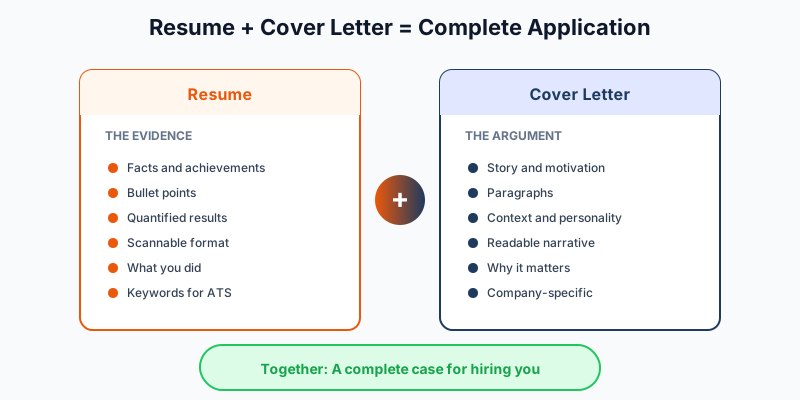
The Fundamental Difference
| Resume | Cover Letter |
|---|---|
| Facts and achievements | Story and motivation |
| Bullet points | Paragraphs |
| Scannable | Readable |
| What you did | Why you did it |
| Quantified results | Context and personality |
| Same format for all jobs | Customized for each company |
Your resume is the evidence. Your cover letter is the closing argument.
The #1 Mistake: Repeating Yourself
Many applicants write cover letters that just rehash their resume in paragraph form.
Don’t do this:
“I have 5 years of marketing experience. At my previous company, I managed social media accounts and increased engagement. I also created email campaigns…”
This adds nothing. The recruiter already has your resume.
Do this instead:
“When I joined StartupXYZ, their social media presence was an afterthought. Within 6 months, I’d built a content strategy that turned our Instagram into our top lead source. That experience taught me how to build something from nothing, which is exactly what your job posting describes.”
Same achievement, but now with context, personality, and relevance.
What Each Document Should Do
Your Resume Should:
- List quantified achievements
- Include relevant keywords for ATS
- Show your career progression
- Provide scannable proof of qualifications
Your Cover Letter Should:
- Explain why you want THIS job at THIS company
- Highlight 1-2 achievements with context
- Show personality and communication skills
- Address anything unusual (career change, gap, relocation)
- End with a clear call to action
How to Connect Them
1. Same Tailoring, Different Depth
Both documents should target the same job. If your resume emphasizes “project management,” your cover letter should expand on a project management story.
2. Cover Letter Expands Resume Highlights
Pick your 1-2 strongest resume bullets and give them context:
Resume bullet:
“Reduced customer churn by 25% through proactive outreach program”
Cover letter expansion:
“When I noticed our churn rate climbing, I proposed a proactive outreach program. I analyzed our data to identify at-risk accounts, created a playbook for the team, and personally saved our three largest accounts. The result was a 25% reduction in churn and $400K in retained revenue.”
3. Address What the Resume Can’t
Use your cover letter for:
- Career changes: “My teaching background might seem unconventional, but…”
- Gaps: “After taking time to care for family, I’m excited to return to…”
- Relocation: “I’m relocating to Toronto in March and am targeting roles in…”
- Specific interest: “I’ve followed your company since your Series A because…”
4. Consistent Tone and Branding
Both documents should feel like they’re from the same person:
- Same header/contact info design
- Consistent formatting style
- Matching professional tone
- Similar vocabulary and voice
The 3-Paragraph Cover Letter Structure
Keep it short. Hiring managers appreciate brevity.
Paragraph 1: The Hook (2-3 sentences) Why this company? Why this role? Show genuine interest.
Paragraph 2: The Proof (3-4 sentences) Your most relevant achievement, expanded with context. Connect it directly to their needs.
Paragraph 3: The Close (2-3 sentences) Reiterate interest. Suggest next steps. Thank them.
Total length: Under 250 words.
Quick Consistency Checklist
Before submitting both documents:
- Both target the same job with same keywords
- Cover letter doesn’t just repeat resume bullets verbatim
- Contact information matches exactly
- Formatting is consistent (fonts, colors, header style)
- Cover letter addresses the company by name
- Both documents are saved as professional file names
Sending Them Together
File naming:
FirstName_LastName_Resume.pdfFirstName_LastName_CoverLetter.pdf
In the application:
- If there’s one upload field, combine into a single PDF
- If separate fields, upload each to the correct one
- Always follow the application instructions exactly
When You Don’t Need a Cover Letter
Skip the cover letter when:
- The posting explicitly says not to include one
- The application system doesn’t allow attachments
- You’re applying through “Easy Apply” with no cover letter option
When in doubt, include it. A good cover letter rarely hurts.
Save Time with the Right Tools
Creating a tailored resume AND cover letter for every application is time-consuming. That’s why we built tools to help:
- Resume Tailor matches your resume to any job description
- Cover Letter Generator creates personalized cover letters in 30 seconds
- Application Kit gives you both together in one package
Your resume and cover letter should tell one cohesive story. Make sure they’re working together, not against each other.
Get your resume + cover letter kit and apply with confidence.