How Long Should Your Resume Be? The Definitive Answer
One page or two? Here's the real answer to the resume length question, based on your experience level and industry.
The internet is full of conflicting advice about resume length. One page only. Never more than two. Three pages for executives. It’s confusing.
There’s no universal rule. The right length depends on your experience, your industry, and what you’re applying for.
The General Guidelines
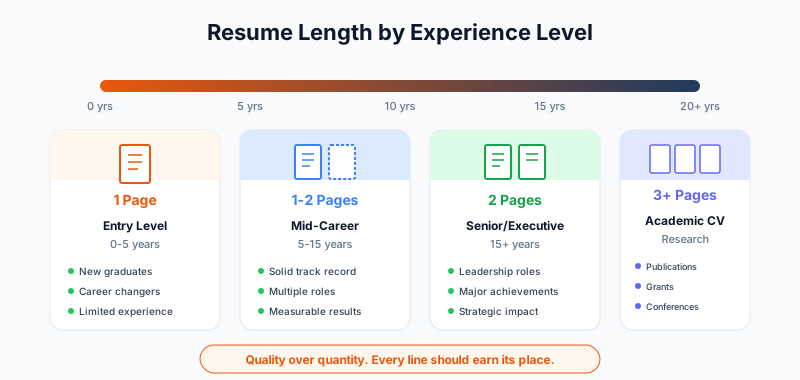
Entry-level and early career (0-5 years): One page. You don’t have enough relevant experience to justify more, and padding it out makes you look like you’re stretching.
Mid-career (5-15 years): One to two pages. If you have substantial, relevant achievements, use the space. If not, stay at one.
Senior and executive (15+ years): Two pages, occasionally three for C-suite roles. Your track record justifies the length.
Academic and research roles: CVs can be 3+ pages. These are different from resumes and follow different conventions.
What Actually Matters
Length is less important than these factors:
Relevance. Every line should support your candidacy for this specific role. Cut anything that doesn’t.
Density. A packed one-page resume is worse than a clean two-page resume. White space helps readability.
Impact. Lead with your strongest achievements. If your best work is buried on page two, restructure.
The Real Test
Ask yourself: if I remove this bullet point, does it hurt my chances? If not, remove it.
Recruiters spend 6-7 seconds on initial resume scans. They’re not counting pages. They’re looking for relevant qualifications and clear achievements.
Quick Decision Framework
| Your Situation | Recommended Length |
|---|---|
| New graduate | 1 page |
| Career changer | 1 page (focused on transferable skills) |
| 5-10 years experience | 1-2 pages |
| 10-15 years experience | 2 pages |
| Executive/C-suite | 2 pages (3 max) |
| Academic/Research | 2+ pages (CV format) |
The Bottom Line
One strong page beats two weak pages. Two relevant pages beat one cramped page.
Focus on impact, not length. Include what matters. Cut what doesn’t.
Need help deciding what stays and what goes? Get your resume scored and see which sections are helping you and which are hurting.